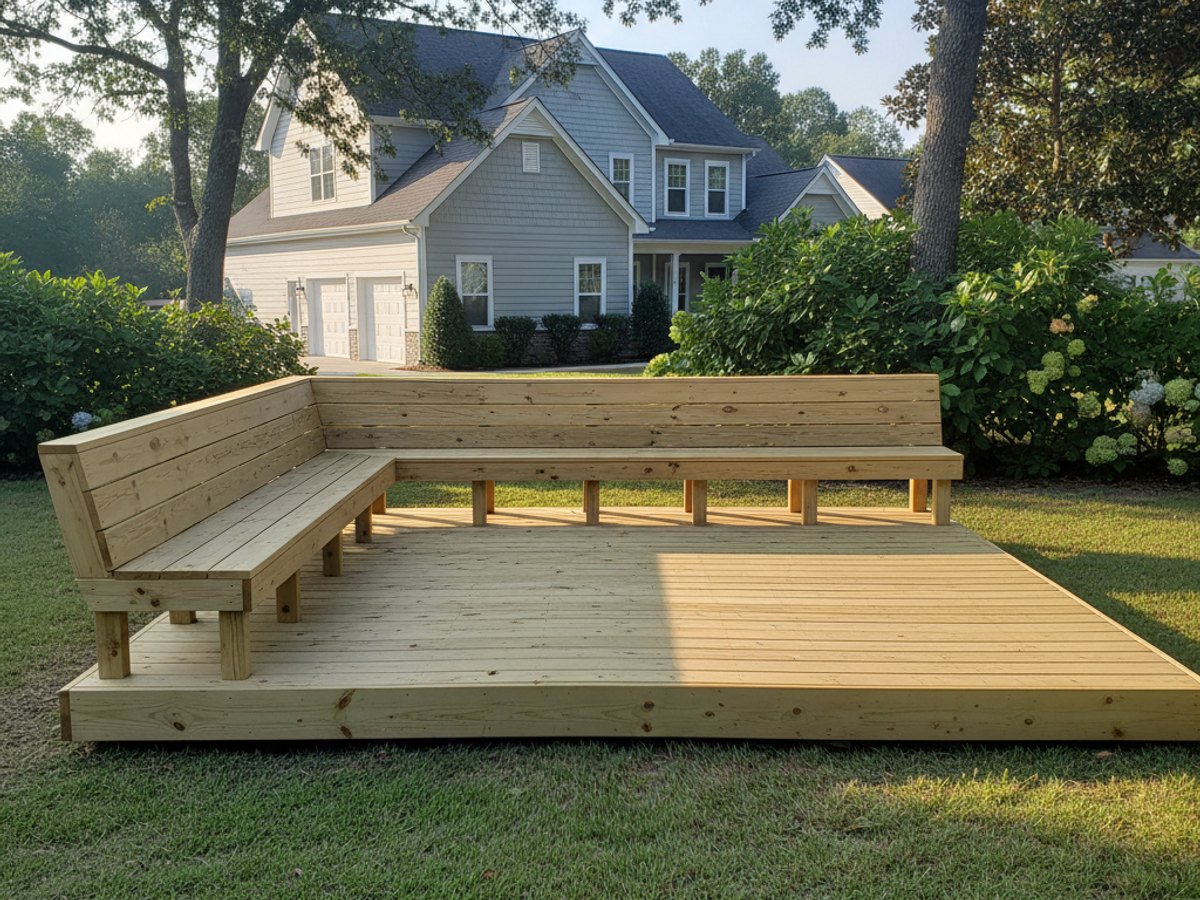
Canton gets a rush of deck builders every spring, right after the first warm weekend when everybody looks at their backyard and decides this is the year. Some of those crews are good. Some are a guy with a truck, a nail gun, and a Facebook page from last March. You can't always tell the difference by looking at a business card. You can tell by asking the right questions and knowing what the answers should sound like.
This is a trade where the mistakes don't show up right away. A deck that's framed wrong or footed wrong can look fine for two or three years and then start to sag, twist, or pull away from the house right when you've forgotten who built it. Here's what separates the builders worth hiring from the ones you should let walk.
What's actually holding the deck up
The part nobody sees is the part that matters most. Footings in this area need to go down far enough to sit on stable soil, not just deep enough to pass a glance. Madison County has a lot of clay in it, and clay moves. It swells when it's wet and shrinks when it's dry, and a footing that's poured too shallow, or poured without enough concrete, will heave a little every year until the whole deck is out of level. Ask how deep the footings are going and what diameter the piers are. If the answer is a shrug, that's your answer.
Ledger board attachment is the other spot where corners get cut. That's the board bolted to your house that the whole deck hangs off of. It needs to be lag-bolted or through-bolted into the rim joist, not just nailed, and it needs flashing behind it so rainwater doesn't run down between the ledger and the house siding. Skip the flashing and you'll find rot back there in five years, usually right when you go to sell the house.
Joist spacing matters more than people think. 16 inches on center is standard for most decking, but composite boards and wider spans sometimes call for 12 inches. A builder who says "16 on center, always, no matter what" without asking what decking you're using isn't paying attention.
Permits and inspections in Canton
If you're inside the Canton city limits, a deck attached to your house almost always needs a building permit, and it'll get inspected at least twice: once when the footings are dug and the forms are set, before any concrete goes in, and again after framing but before the decking boards go down. If you're out in unincorporated Madison County, permitting runs through the county instead of the city, but the same basic steps apply. A contractor who tells you permits aren't necessary for a deck is either wrong or hoping you won't ask again. Either way, that's a problem, because an unpermitted deck can come back to bite you at closing when a buyer's inspector notices there's no permit history for a structure attached to the house.
Newer subdivisions around Highway 51 and toward Madison tend to have HOA rules on top of the city or county permit, usually about railing style, deck height, or how close you can build to a property line. Older homes near the Canton square and the historic district don't usually have an HOA to deal with, but they often have older wiring, older plumbing stubs, and sometimes an old slab or foundation footing buried right where you want to dig, especially on lots that have been added onto more than once since the house went up decades ago. A builder who's worked in both settings knows to check before they dig, not after they hit something.
Materials, and what the quote should actually say
A one-line quote that just says "deck, 12x16, $6,500" tells you nothing. A real quote breaks out the framing lumber, the decking material, the railing, the fasteners, and the labor separately, and it names the species or brand. Pressure-treated pine is the standard framing lumber here and it should be rated for ground contact wherever it's within 6 inches of the soil or embedded in a footing. For the decking surface itself you're choosing between pressure-treated boards, which are cheapest but need staining every year or two and will crack and cup over time, and composite decking, which costs more up front but doesn't need sealing and holds up better through our humid summers.
Fasteners matter more than people expect. Modern pressure-treated lumber is chemically treated in a way that corrodes plain steel screws and nails fast. Anything touching that lumber needs to be hot-dip galvanized or stainless steel, and any builder still using standard deck screws on ACQ-treated lumber is going to give you rust streaks and popped fastener heads within a couple of summers.
Ask what happens with the wood before it gets stained. Pressure-treated lumber needs time to dry out, usually 30 to 60 days depending on how wet it was when it was milled, before stain or sealer will actually soak in instead of sitting on top and peeling. A builder who wants to stain the deck the same week they build it either doesn't know that or doesn't care.
Weather and why timing changes the job
Canton summers run hot and heavy with humidity from June through September, which slows down glue-ups, adhesives, and any sealant that needs to cure without rain on it. Spring brings the heaviest rain of the year here, and hurricane remnants moving up from the Gulf in late summer and fall can dump several inches in a single afternoon. A builder working through those months should be grading the ground under and around the deck so water sheds away from the house instead of pooling under it, and should know enough to hold off pouring footings the day before a storm is forecast. Winter here rarely gets hard freezes, but we do get the occasional night in the 20s, and concrete poured in cold, damp weather cures slower and weaker if it isn't protected.
Questions worth asking before you sign anything
- How deep are the footings going, and what's the soil like where they're digging?
- Is the ledger board being flashed, and with what?
- Is a permit being pulled, and who's pulling it?
- What's the warranty on labor versus the manufacturer's warranty on the decking material?
- Who's doing the actual building: the person you're talking to, or a crew you haven't met?
A contractor who answers those without hesitation has built decks before and thought about the parts that fail. One who gets vague, rushes you to sign, or wants a big deposit before any material shows up on site is worth walking away from, no matter how good the price looks on paper.
We've built and repaired decks all over Canton and the towns around it, on old lots and new ones, in clay soil and sandy fill, and we're happy to walk your yard and tell you what we'd actually do before you spend a dollar. You can see more about the work we do at Oasis Deck Co.